
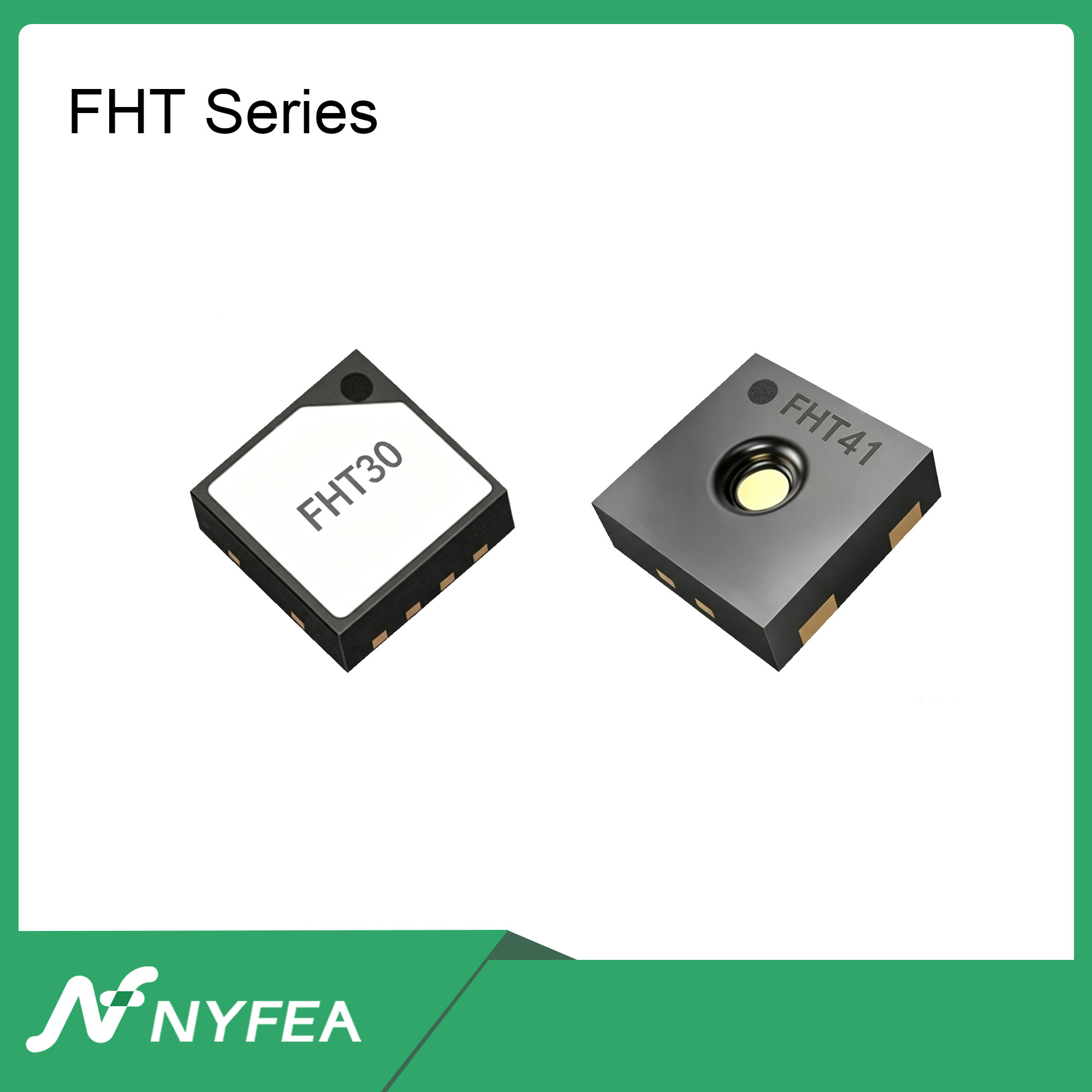
FHT Series Temperature and Humidity Sensors Overview
Temperature and humidity sensors are devices used to measure the temperature and relative humidity of ambient air and other gaseous environments. Relative humidity is the ratio of the partial pressure of water vapor in a gas to the saturation vapor pressure of water at the same temperature and is typically expressed in percent relative humidity (%RH). Digital temperature and humidity sensors integrate a humidity-sensing element, a temperature-sensing element, signal-conditioning circuitry, an analog-to-digital converter, calibration-data memory, and a digital communication interface within a single device. They can provide digital temperature and relative humidity measurements directly to a microcontroller or processor.
The FHT Series includes the FHT30, FHT31, FHT40, FHT41, FHTC3, and other digital temperature and humidity sensors. These devices use a capacitive humidity-sensing element to measure relative humidity and an on-chip temperature sensor to obtain temperature data. Signal acquisition, analog-to-digital conversion, calibration-data processing, and digital output are performed internally, helping to reduce the need for external analog signal-conditioning circuitry and simplify system design. Individual models differ in measurement accuracy, supply-voltage range, power consumption, package dimensions, pin functions, and measurement commands.
The FHT30 and FHT31 are supplied in 2.5 mm × 2.5 mm × 0.9 mm DFN packages and operate from a supply voltage of 2.0 V to 5.5 V. They support I²C communication at rates of up to 1 MHz and provide two selectable device addresses. Both devices offer a relative humidity measurement range of 0% to 100% RH and a temperature measurement range of −45°C to +130°C. The FHT30 provides typical accuracies of ±3% RH and ±0.3°C, while the FHT31 provides typical accuracies of ±2% RH and ±0.2°C. The temperature range over which the typical temperature accuracy applies, as well as the maximum humidity error, should be interpreted with reference to the error curves and test conditions specified in the applicable datasheet.
The FHT40 and FHT41 are supplied in 1.5 mm × 1.5 mm DFN4 packages and operate from a supply voltage of 1.6 V to 5.5 V. They support I²C communication at rates of up to 1 MHz. According to the currently available datasheets, both devices offer a relative humidity measurement range of 0% to 100% RH and a temperature measurement range of −40°C to +125°C, with typical accuracies of ±1.8% RH and ±0.2°C. The on-chip heater provides adjustable power settings and can be used to heat the sensing element and help manage condensation risk under specific conditions. However, it is not a substitute for system-level waterproofing, condensation-control design, ventilation, or environmental control.
The FHTC3 is supplied in a 2 mm × 2 mm × 0.75 mm DFN6 package, operates from a supply voltage of 1.6 V to 5.5 V, and supports I²C digital communication. It offers a relative humidity measurement range of 0% to 100% RH and a temperature measurement range of −45°C to +130°C, with typical accuracies of ±3% RH and ±0.3°C. The FHTC3 provides a sleep mode and low energy consumption per measurement, making it suitable for space- and power-constrained consumer electronics, mobile devices, and wireless sensor nodes.
FHT Series temperature and humidity sensors can be used in smart home systems, environmental monitoring, communications equipment, photovoltaic (PV) and energy storage systems, cold-chain transportation, smart agriculture, consumer electronics, and industrial control systems. Actual measurement results may be affected by airflow, mounting location, nearby heat sources, heat transfer through the PCB, enclosure design, contaminants, condensation, and prolonged exposure to high humidity. The sensor measures the local environment around its humidity-sensing area and the IC. As a result, the measurements may not fully represent the environment outside the system or the actual temperature of the object being measured.
Product selection should take into account the measurement range, accuracy and its applicable conditions, supply voltage, power consumption, sampling rate, I²C address, package dimensions, response time, and application environment. Typical accuracy does not represent the maximum error across the entire operating range. Designs intended for volume production should also be evaluated against the error curves, long-term drift, repeatability, humidity hysteresis, and recommended operating conditions specified in the datasheet. Detailed electrical characteristics, communication commands, and mounting requirements are provided in the official datasheet for each device.
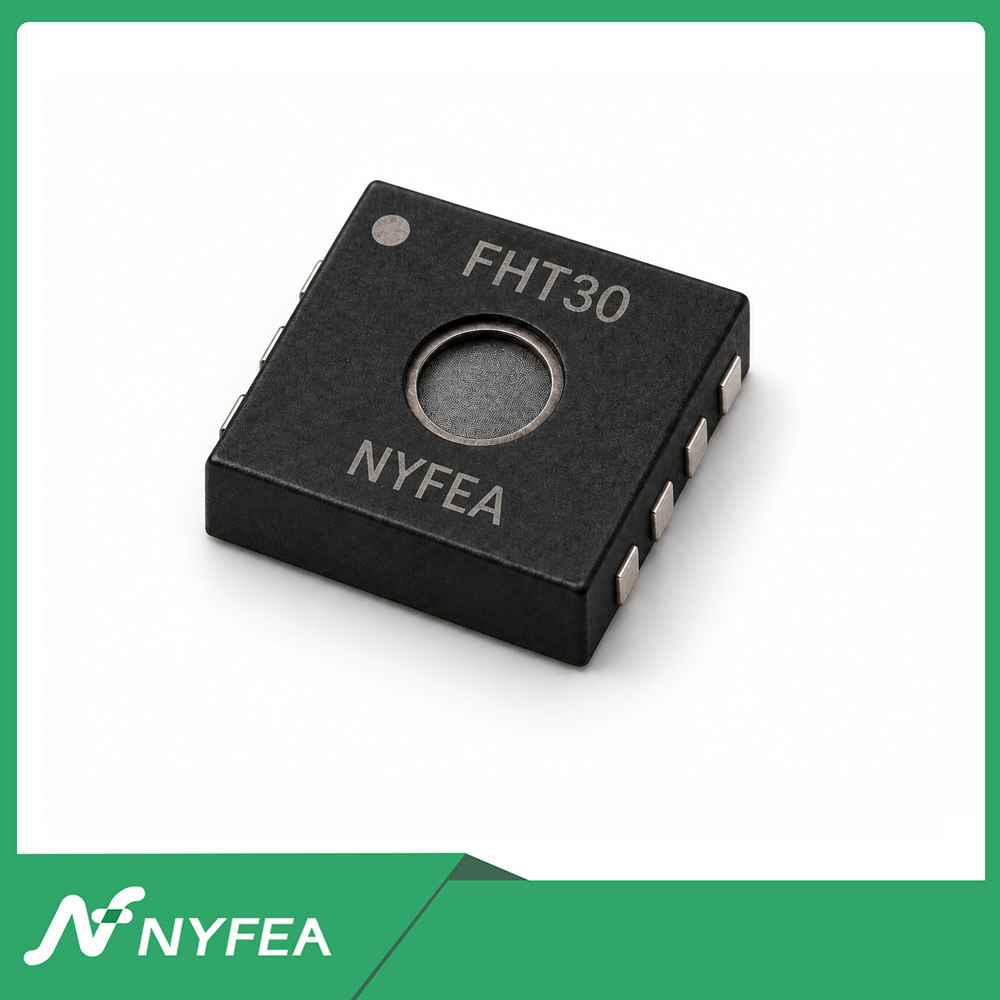
FHT30
FHT30 targets digital temperature and relative-humidity measurement where dual I²C addresses, periodic acquisition, an alert output and a compact open-cavity package are useful
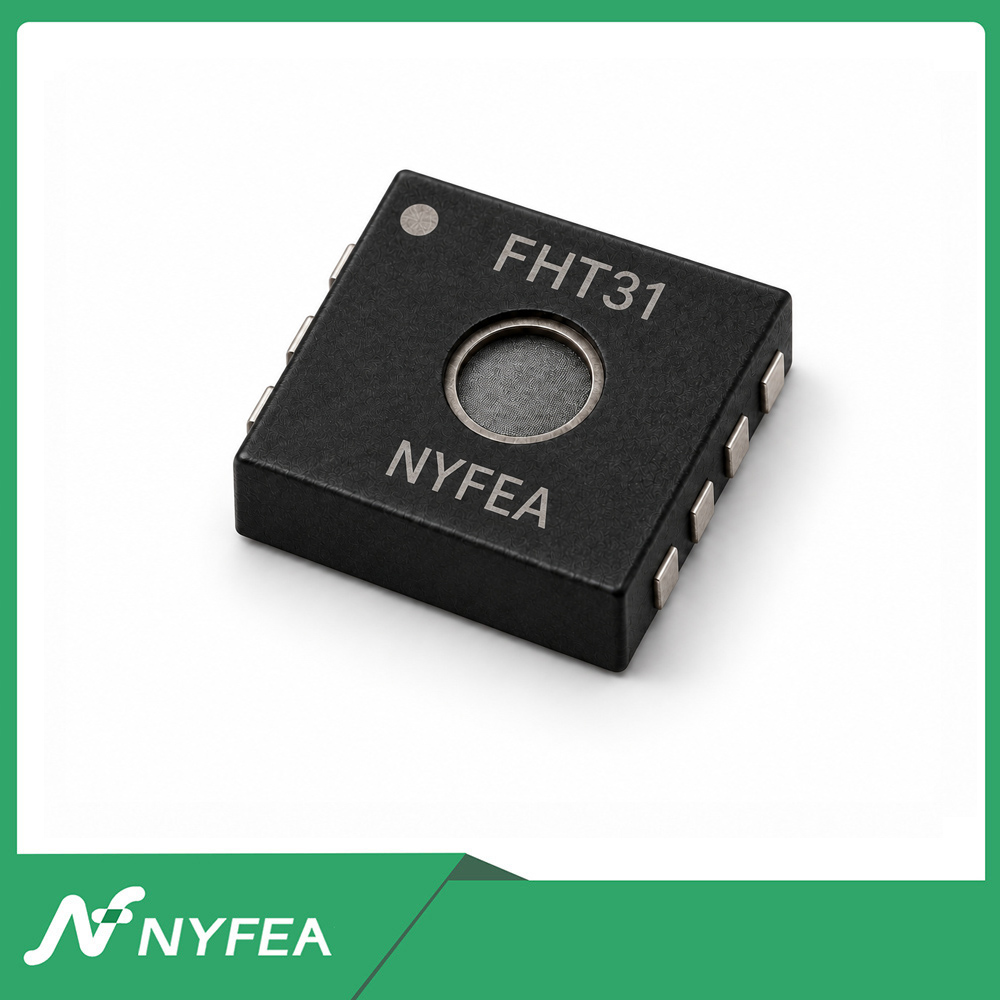
FHT31
The ±2%RH and ±0.2 °C figures are typical values, not guaranteed maximum limits across every temperature and humidity combination. Use the tolerance plots, response time, drift, chemical limits and assembled-product tests when setting a system accuracy claim.
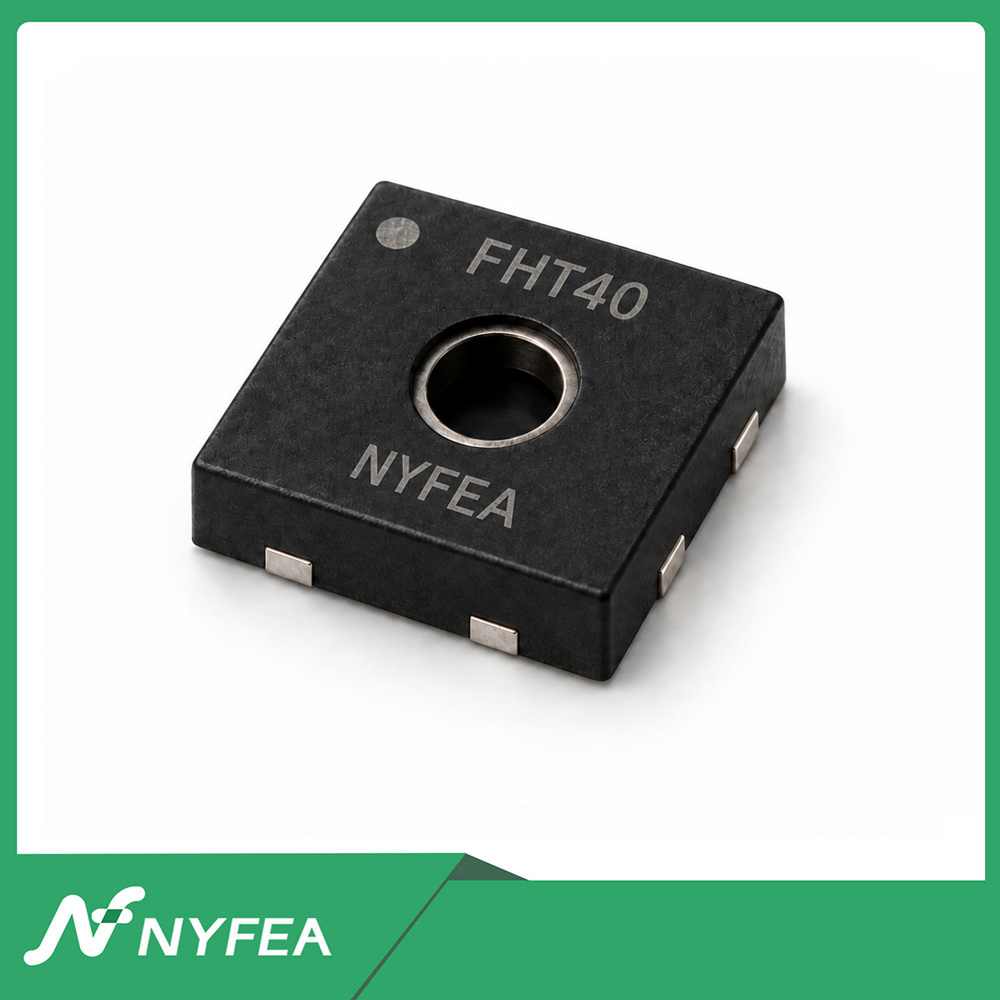
FHT40
Typical accuracy is not a universal maximum. Review the humidity/temperature tolerance maps, response time, drift, chemical exposure, self-heating and mechanical placement before setting an end-product accuracy claim.
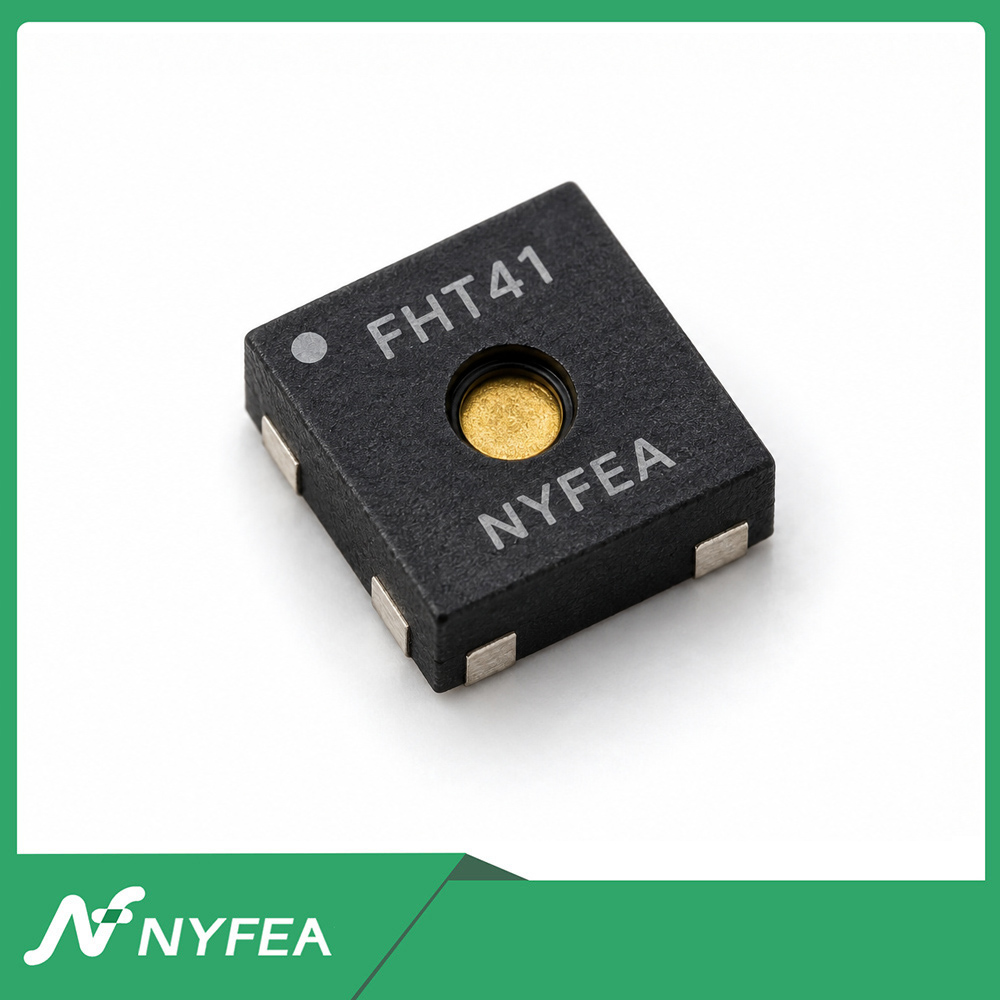
FHT41
FHT41 is a high-precision digital temperature and humidity sensor for low-power systems. Its compact package, selectable repeatability and integrated heater support space-constrained consumer, cabin and industrial designs.
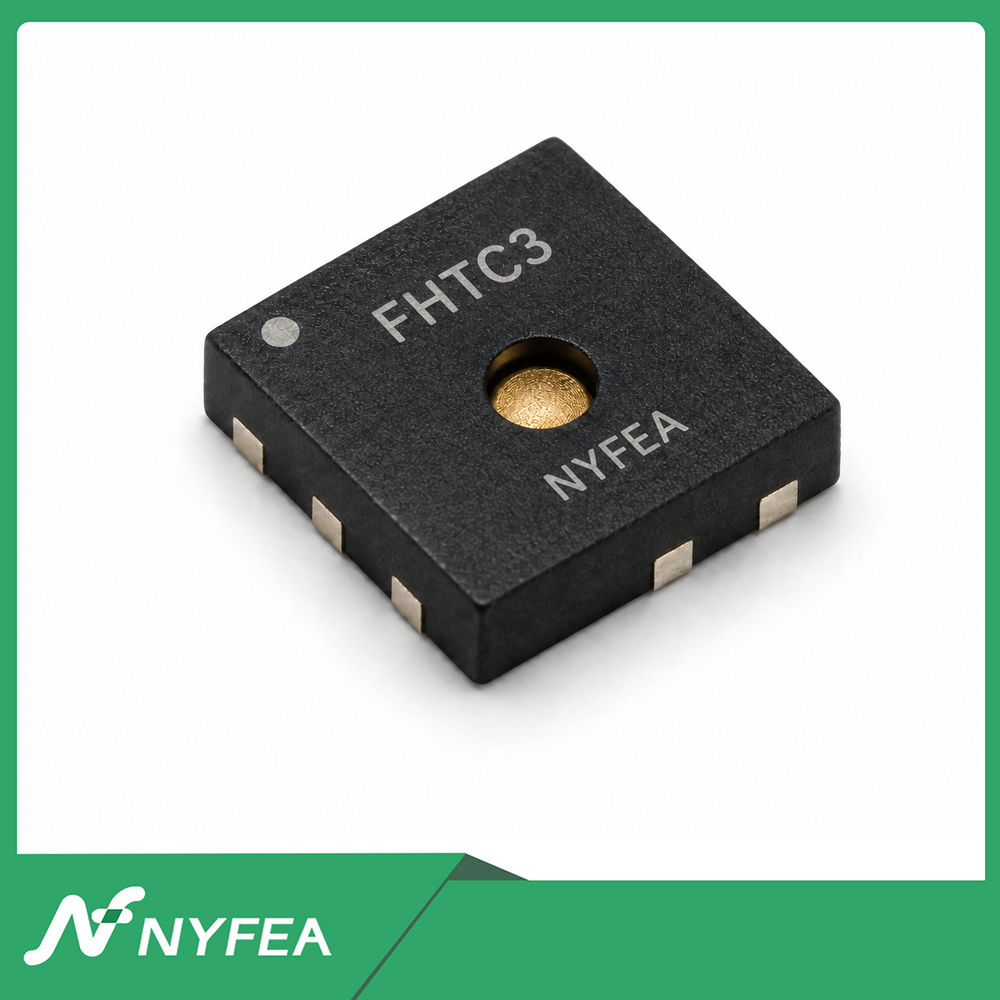
FHTC3
FHTC3 is a factory-calibrated digital sensor for simultaneous temperature and relative-humidity measurement. Its low standby current, two measurement-power modes and small leadless package suit compact connected products.
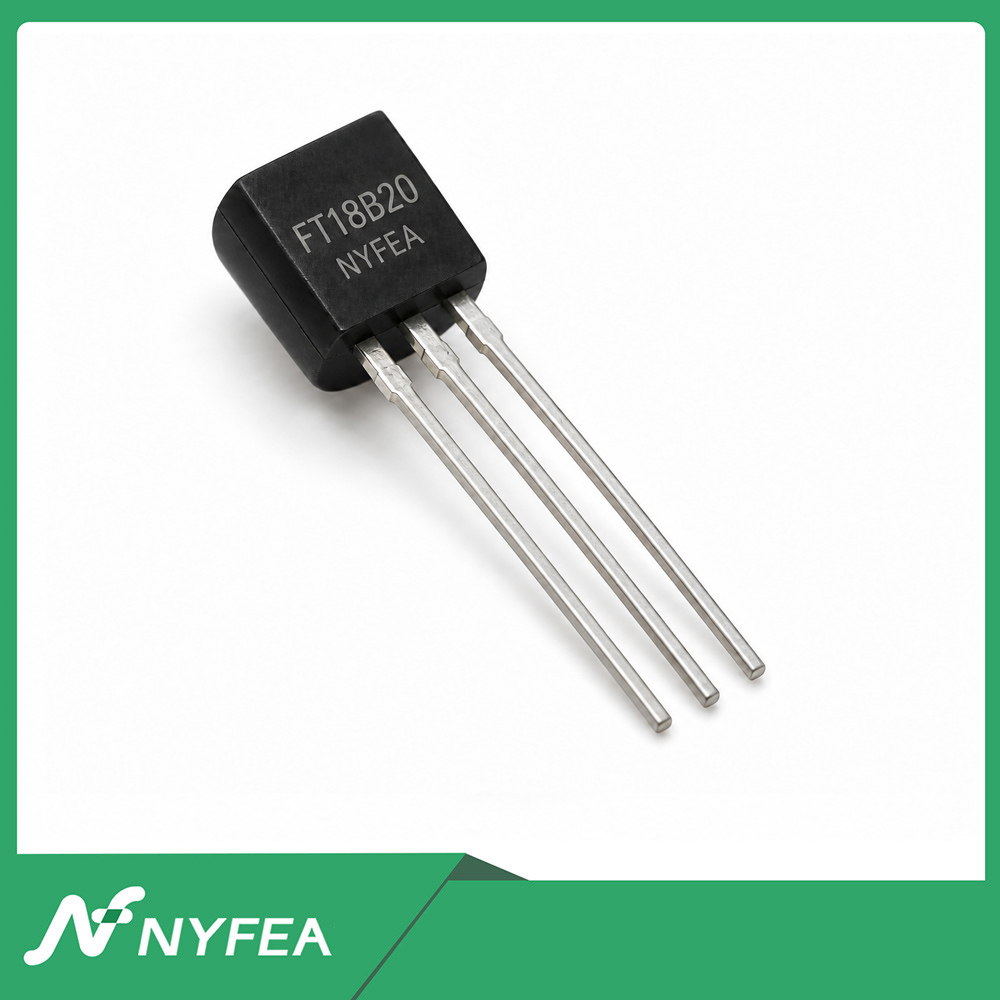
FT18b20
FT18B20 is intended for direct digital temperature measurement on a single-drop or multidrop 1-Wire bus. Its ROM identity, alarm search, configurable conversion time and optional two-wire parasite-power connection suit distributed temperature sensing.