NF Series RFID Chips Overview
Radio-frequency identification (RFID) ICs are key semiconductor components in RFID systems, performing RF signal transmission and reception, data processing, and the storage of identification information. Based on their functions and locations within the system, RFID ICs are generally classified into reader/writer ICs and ICs embedded in contactless cards or electronic tags.
During an RFID transaction, reader/writer ICs perform card or tag detection, anti-collision processing, device selection, authentication, and data reading and writing. They also implement essential low-level functions, including carrier modulation, signal demodulation, data encoding and decoding, protocol processing, and error checking. These capabilities enable complete RFID read/write operations in applications such as access control, identity authentication, smart devices, and electronic tag management.
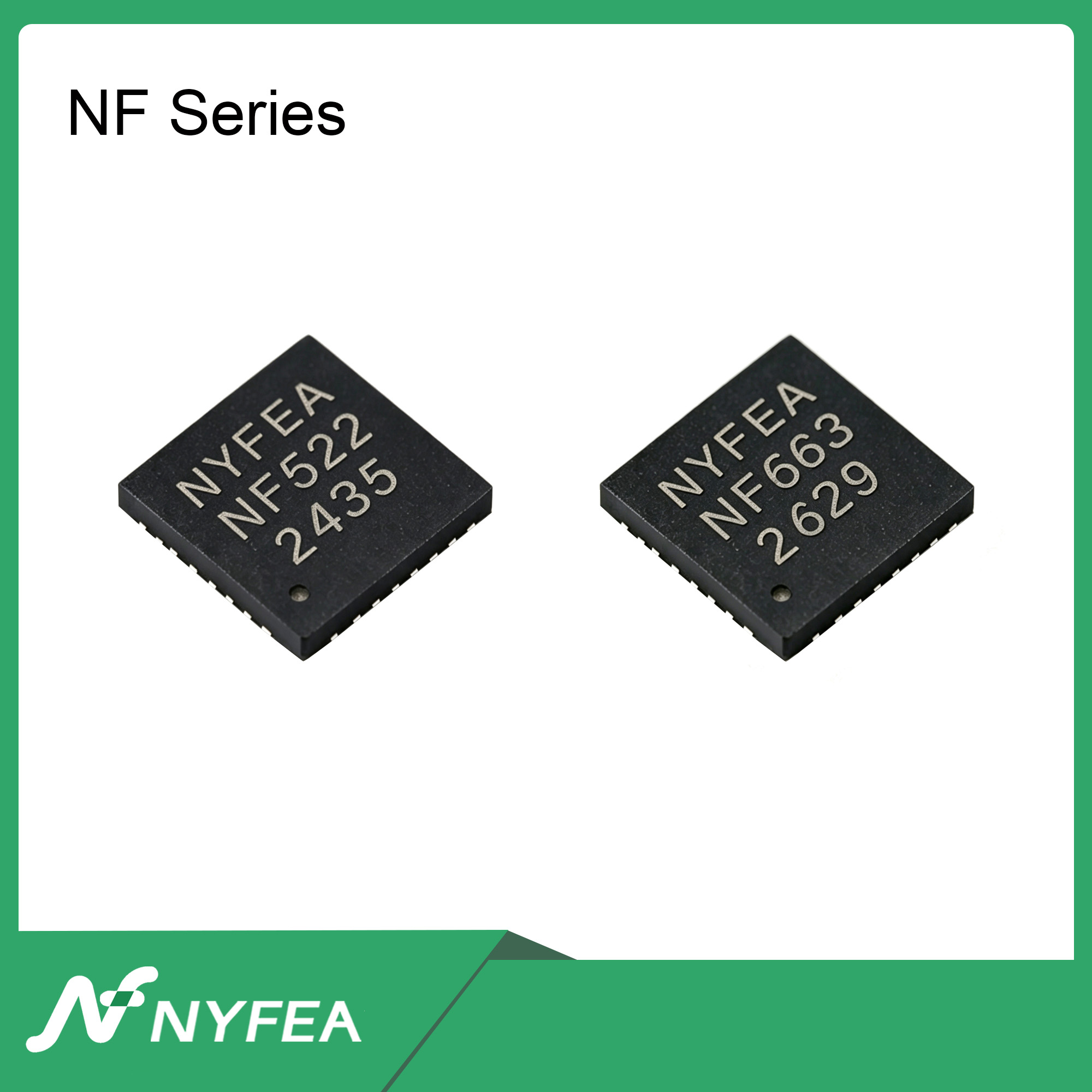
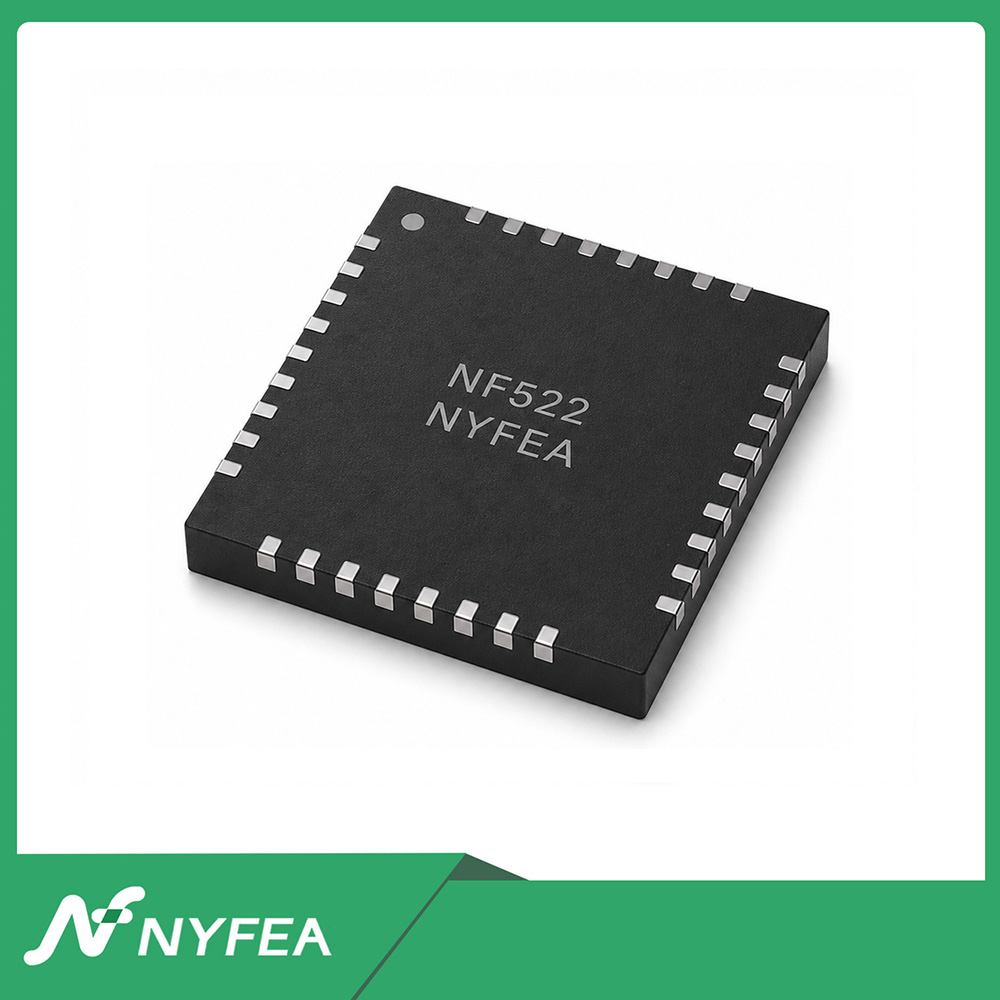
The NF522 series is representative of this class of RFID reader/writer ICs. Using its RF front end together with an external antenna and impedance-matching network, the NF522 establishes a bidirectional contactless communication link with compatible cards or electronic tags. In addition to reading identification and application data, it can write, modify, or update designated memory blocks, subject to the card or tag type, supported commands, and granted access permissions.
The NF Series includes the NF522, NF663, and other RFID chips designed primarily for 13.56 MHz contactless reader applications. The NF522 supports reader modes for ISO/IEC 14443 Type A, ISO/IEC 14443 Type B, and ISO/IEC 15693, and provides SPI, I²C, and UART host interfaces.
The chip integrates a 64-byte transmit/receive FIFO, CRC-16 error checking, a programmable timer, interrupt control, and low-power card detection. Together with a microcontroller unit (MCU), an antenna, and an RF impedance-matching circuit, the NF522 can be used to build a contactless RFID reader system.
NF Series RFID chips are suitable for applications including access control and time-and-attendance systems, identity authentication, smart terminals, asset management, industrial identification, and portable reader devices.
System performance—including protocol compatibility, communication speed, power consumption, and effective read/write range—depends on the specific chip model, antenna design, impedance matching, tag characteristics, power-supply conditions, and installation environment. Product selection and circuit design should be based on the official datasheet and technical specifications for the applicable device model.

Temperature Humidity Sensor